Assessing the Impact of Revolutionary Leaders: A Comparative Analysis
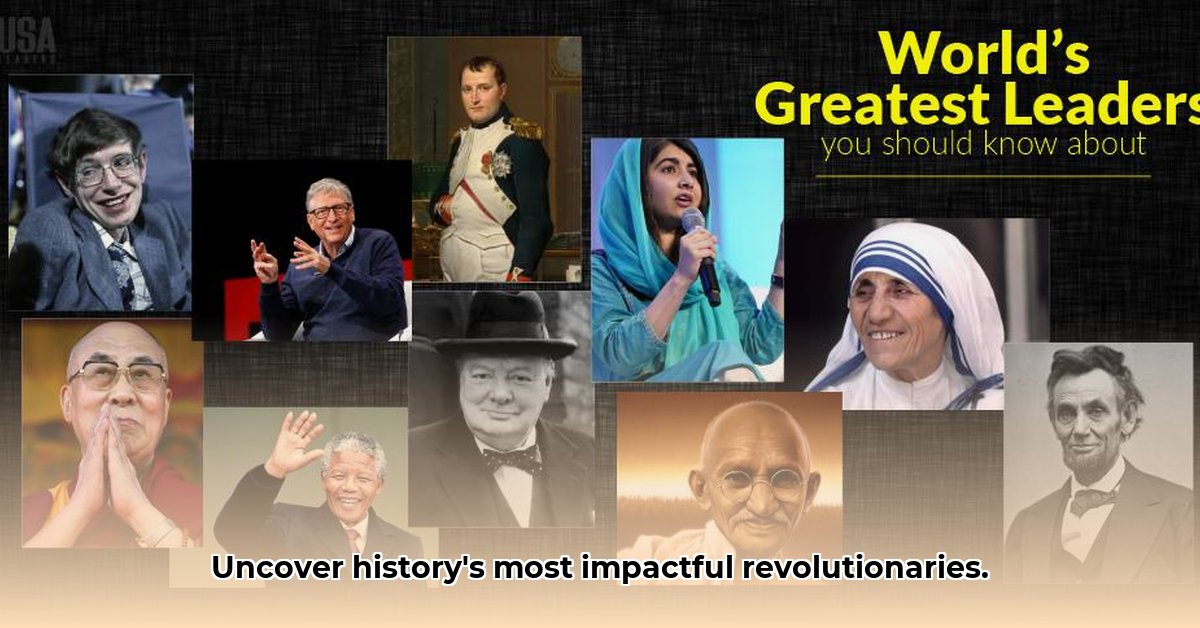
This article analyzes the impact of several prominent revolutionary leaders, focusing on their goals, strategies, and lasting legacies. Direct comparison is challenging due to the unique historical contexts in which they operated. However, by examining common elements and employing a structured approach, we can glean valuable insights into their effectiveness and influence. The analysis will avoid subjective judgments of "good" or "bad," instead prioritizing objective assessment based on verifiable historical data. Understanding these leaders' successes and failures offers valuable lessons for analyzing social and political change. What factors contributed to their success, and what are the long-term implications of their actions? For more revolutionary leader profiles, see this helpful resource.
Methodology: A Framework for Comparison
To facilitate a fair comparison, we'll examine several key factors for each revolutionary leader:
- Primary Goals: What were the leader's stated objectives and ultimate aims?
- Core Strategies: What methods did the leader employ to achieve their goals? Were these strategies primarily violent or non-violent?
- Underlying Ideologies: What philosophical or political beliefs underpinned the leader's actions?
- Long-Term Impact: What was the lasting effect of the leader's actions on their society and the wider world? Were their goals ultimately achieved? What unintended consequences resulted?
This structured approach allows for a more nuanced understanding of each leader's contribution to history, acknowledging the complexity of their legacies and avoiding simplistic evaluations.
Case Studies: Mahatma Gandhi and Ernesto "Che" Guevara
This analysis will focus on two prominent figures representing distinct approaches to revolutionary change: Mahatma Gandhi and Ernesto "Che" Guevara. Gandhi championed nonviolent resistance, while Guevara advocated for armed struggle. Their contrasting strategies highlight the diverse paths to revolutionary transformation and raise crucial questions about the ethics and effectiveness of different revolutionary approaches. How do differing contexts shape revolutionary strategies and outcomes?
Mahatma Gandhi: The Power of Nonviolent Resistance
Mahatma Gandhi's leadership of India's independence movement proved the efficacy of nonviolent resistance. His philosophy of Satyagraha ("truth force"), utilizing civil disobedience, peaceful protests, and hunger strikes, mobilized mass support against British rule. While Gandhi's success in achieving Indian independence is undeniable, his legacy remains complex. Historians continue to debate the extent to which his methods addressed underlying social and economic inequalities, and whether his emphasis on religious harmony fully succeeded in a diverse nation.
- Primary Goals: Indian independence; social harmony; religious tolerance.
- Core Strategies: Civil disobedience, nonviolent resistance, peaceful protests, hunger strikes.
- Underlying Ideologies: Satyagraha, Hindu philosophy, Indian nationalism.
- Long-Term Impact: Inspired countless global movements for civil rights and freedom; significantly affected India's post-independence development; ongoing debate about the efficacy of his approach in fully addressing social inequalities.
Ernesto "Che" Guevara: Revolution Through Armed Struggle
Ernesto "Che" Guevara, a key figure in the Cuban Revolution, championed armed struggle as a means to overthrow oppressive regimes. His guerrilla warfare tactics became a model for numerous liberation movements across Latin America and Africa. However, the violent nature of his methods sparked intense debate about the ethical implications and long-term consequences of armed revolution. Did the ends justify the means? This question continues to be hotly discussed within academic circles.
- Primary Goals: Marxist revolution; global liberation from oppression; establishment of socialist states.
- Core Strategies: Guerrilla warfare, armed struggle.
- Underlying Ideologies: Marxism, class struggle, anti-imperialism.
- Long-Term Impact: Profound influence on left-wing movements worldwide; inspired numerous revolutionary struggles; ongoing debate on the ethical and practical implications of violent revolution.
Comparing Approaches: A Data-Driven Analysis
The following table summarizes the key differences between Gandhi and Guevara's approaches:
| Feature | Mahatma Gandhi | Ernesto "Che" Guevara |
|---|---|---|
| Primary Goal | Indian Independence, Social Harmony | Marxist Revolution, Global Liberation |
| Key Methods | Nonviolent Resistance | Guerrilla Warfare |
| Underlying Beliefs | Satyagraha, Nonviolence, Indian Nationalism | Marxism, Class Struggle |
| Long-Term Effects | Inspired global peace movements; significant impact on India's development; ongoing debates about lasting social impact | Influenced numerous revolutionary groups; ongoing debate surrounding the ethical and practical efficacy of violent revolution |
Conclusion: The Complexities of Revolutionary Change
This comparative analysis highlights the diverse approaches to revolutionary change and the enduring complexity of their legacies. Both Gandhi and Guevara achieved significant impacts, yet their methods and ultimate successes remain subjects of ongoing discussion. Analyzing their strategies, ideologies, and lasting consequences underscores the importance of nuanced historical assessments and avoids simplistic judgments. Future research can further explore the long-term effects of these revolutionary leaders' actions, examining their influence on different social groups and evaluating the multifaceted nature of revolutionary outcomes. Considering the varied contexts and long-term consequences helps to refine our understanding of successful revolutionary movements and their impact on the world.